Guide
Looking after a foundation
Most of what protects a foundation is ordinary yard work done with the soil in mind. The aim on clay is steady moisture all the way round the house. The aim on rock is to keep runoff moving past it.
Water from the sky
- Gutters
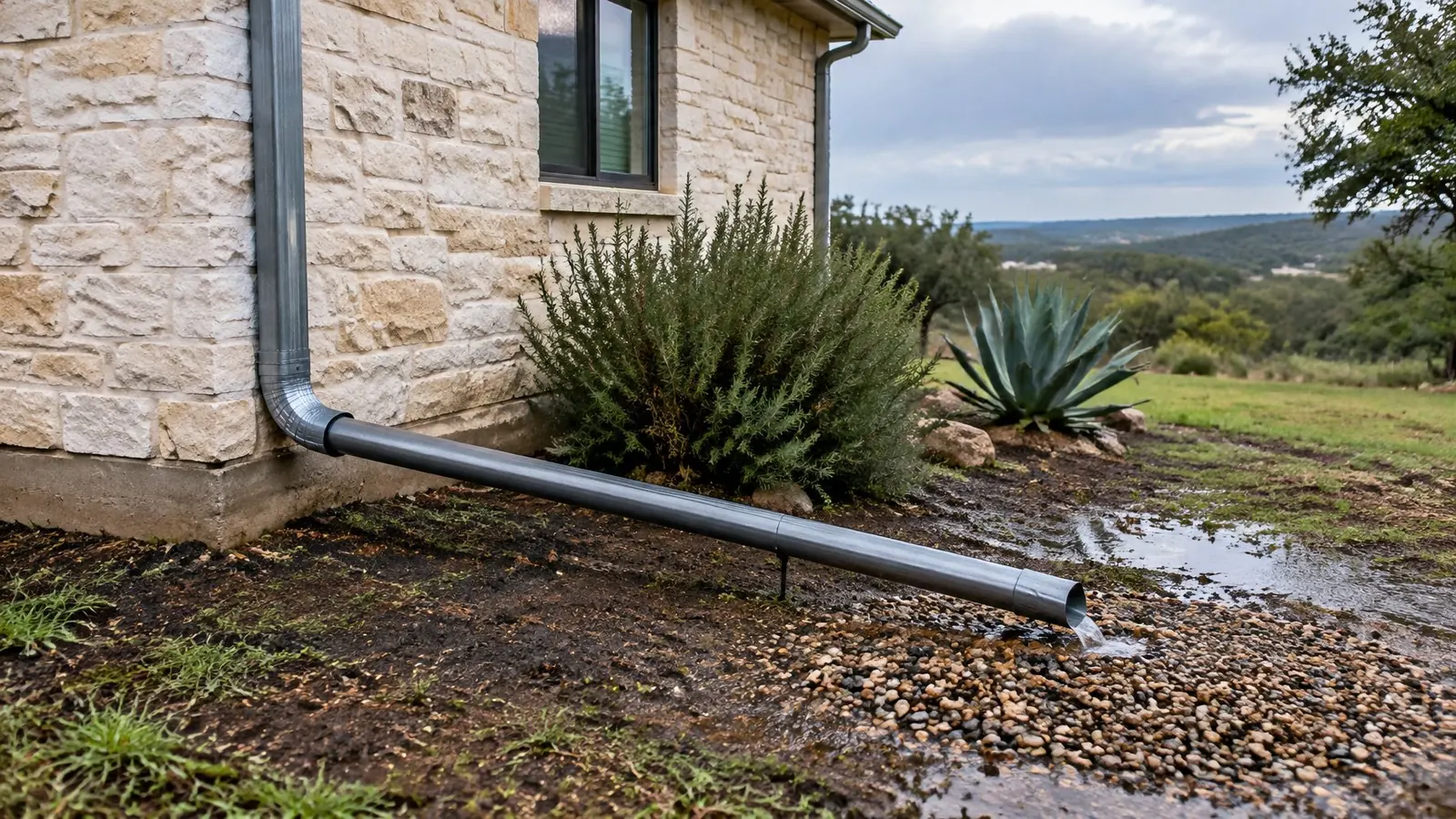
- Keep them clear and firmly hung. A blocked gutter spills a roof's worth of water at one spot beside the slab.
- Downspouts
- Extend each one so it empties onto ground that slopes away, or pipe it to a lower part of the yard.
- Grading
- Soil should fall away from the house on every side. Top up areas that have sunk next to the wall, using clayey fill rather than sandy loam that lets water straight through.
- Beds and edging
- Leave gaps in solid edging so beds can drain, and keep soil and mulch below the top of the slab so the concrete edge stays visible.
Watering in a drought
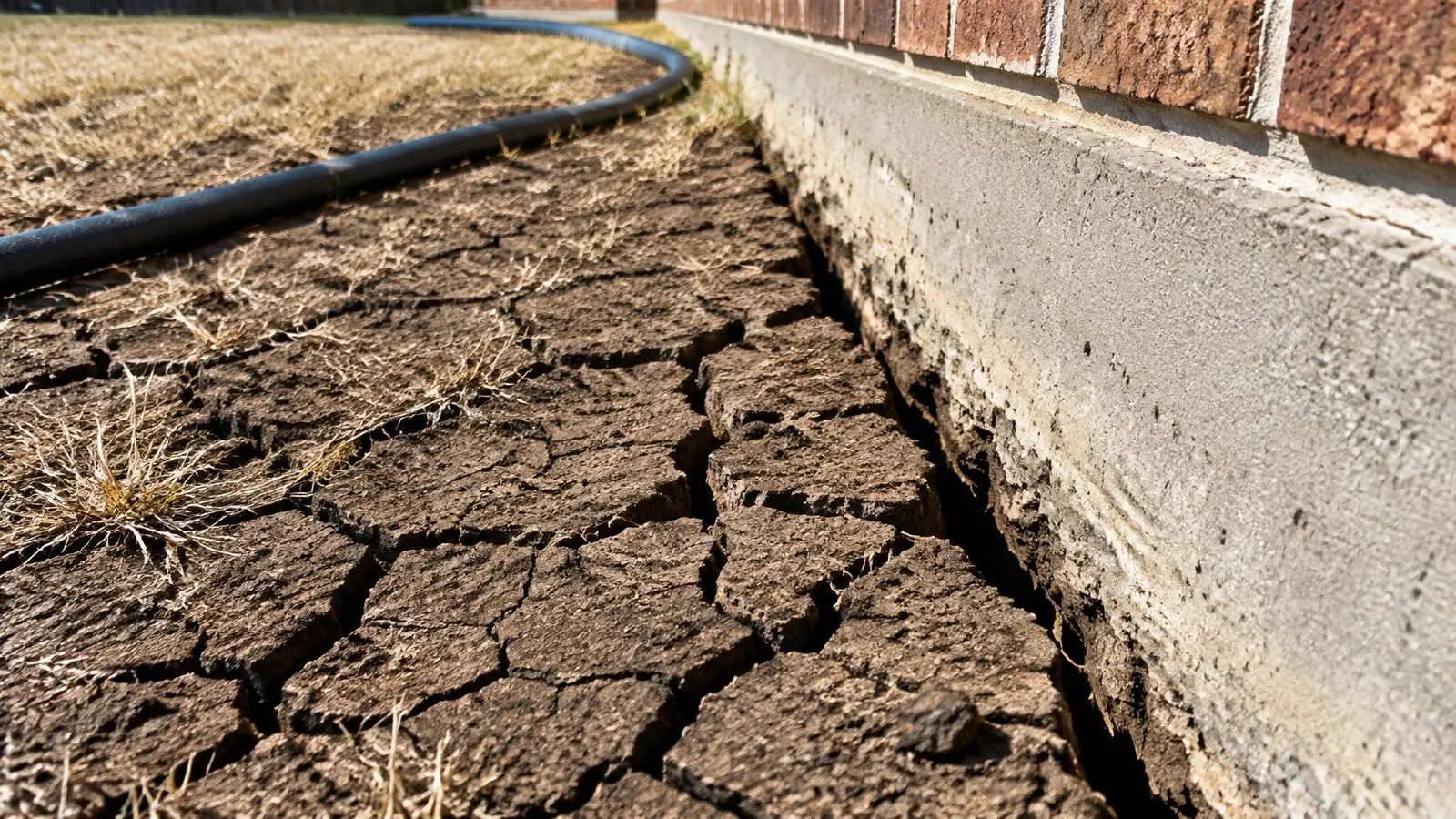
On the clay side of town, long dry spells shrink the soil away from the slab edge. Slow watering along the perimeter keeps that soil from drying far more than the soil under the middle of the house. Lay a soaker hose a foot or two out from the foundation, not against it, and run it long enough to dampen the soil without making mud. The goal is evenness, not wetness.
New Braunfels Utilities writes foundation watering into its conservation rules. Under Stage 2 they allow a foundation to be watered for up to two hours on any day during the permitted watering times, with a handheld hose, or with a soaker hose or drip line placed within 24 inches of the foundation that does not spray above the ground. The stage in force changes with aquifer and river conditions, so check NBU's current conservation stage before you set a timer.
On thin soil over limestone there is little clay to keep moist, and perimeter watering does less. Ask the inspecting company whether it makes sense for your lot.
Trees, pipes and the space under the floor
- Trees
- A big tree near the house competes with the foundation for soil moisture. Water it deeply in dry months so it draws less from under the slab. Before removing a mature tree close to the house, ask an engineer or arborist: clay that the tree kept dry can swell once it is gone.
- Plumbing
- With every tap off, watch the water meter for a few minutes. Movement suggests a leak. Have slow drains and damp spots on the floor looked at promptly, since a leak under a slab feeds the soil for as long as it runs.
- Crawl spaces
- Keep vents open and unblocked, keep soil and stored items away from the skirting, and repair dripping pipes at once. Look underneath once or twice a year with a torch.
- Retaining walls
- On sloping lots, keep the drain holes at the base of a retaining wall clear so water does not build up behind it.
- New projects
- A pool, a patio or a new bed against the house changes how water reaches the soil. Plan the drainage as part of the project.
A twice-a-year check
Late summer and late winter are the dry and wet extremes. Ten minutes each time is enough.
- Walk the outside and look at the slab edge, the brick and the gap between soil and concrete.
- Open and close every door and note any that have changed.
- Photograph known cracks from the same spot and compare with the previous set.
- Run a hose into each gutter and watch where the water goes.
If something has changed between two checks, that is the time to have it measured.
When you are ready
Pages can narrow it down. A level and a floor plan settle it.
Whichever side of the escarpment your house stands on, the answer comes from numbers taken on the spot. The firm that makes the visit then sets down on paper what it measured and what a repair would run to.
Sudden shifting, the smell of gas, or a wall that seems about to come down is a different matter: clear the house first, then dial 911 or your gas provider.
Have your New Braunfels house measured
Ring the number and describe the crack, door or floor that worries you. Whoever answers works for a foundation repair firm near New Braunfels, a separate and independent business, and can book a day to inspect.
Call (830) 879-9995Your call may be recorded. The referral disclosure explains who is paid.