Signs
Sloping, sagging or bouncy floors
Floors are where foundation movement can be measured directly. What the floor is built on decides what a slope or a soft spot is likely to mean, so start by working out which kind of house you have.
Slab house or pier and beam house
Concrete slab
The floor is the foundation
Tile, carpet or wood is laid straight on the concrete, so a slope in the floor is a slope in the slab. Typical signs are a steady tilt toward one outside wall, a low corner, a hump down the middle of a room, or a line of cracked tiles.
Pier and beam
The floor hangs above the ground
A wood floor rests on joists and beams carried by piers, with a crawl space below. Here you are more likely to feel bounce, a dip between supports, or a soft area near a bathroom or the kitchen. Pier and beam floors have their own page.
Not every slope is settlement
No slab is poured perfectly flat. A floor can be out by a noticeable amount from the day the house was finished and never move again. What matters is whether the slope is changing and whether cracks and door problems go with it.
Wood floors sag for wood reasons: joists that were undersized for the span, a sill softened by a slow leak, termite damage, a pier that was never there. Those are real repairs, but some of them belong to a carpenter, a plumber or a pest company before, or instead of, a foundation company.
A slab can also be pushed up rather than let down. Clay that takes on water under the middle of a house, from a leaking drain line for example, lifts the centre and makes the edges look low. The repair for that is different, which is one reason measurement comes first.
How a floor is measured
A reference point is chosen
Usually a spot near the middle of the house. Every other reading is given as higher or lower than that point.
Readings are taken room by room
The inspector uses a digital level that reads height differences through a hose or by pressure, and corrects for the thickness of each floor covering.
The numbers go on a floor plan
The result is an elevation map. Low and high areas show as contours, the way hills do on a trail map.
The map is read with the other signs
Do the low readings sit where the cracks and the sticking doors are? If so the picture is consistent. If not, something else may be going on.
Ask for a copy of the map. It is the baseline for judging any later change and for checking a repair afterwards.
What a repair might involve
For a slab that has dropped along one side, companies commonly propose piers under the outer beam to carry it down to firmer ground and lift it. A sunken area in the middle of a floor may be raised by pumping grout or expanding foam beneath it. Each has limits, covered in repair methods.
For a wood floor the work is done from the crawl space: resetting shims, adding or replacing piers, and replacing beams or joists that have rotted.
Questions about floors
How much slope is too much?
There is no single number a homeowner can apply. Engineers judge the amount of tilt over a distance, the shape of the slope, the damage that comes with it and, above all, whether it is still changing. That judgement needs the elevation map.
Can I check the floor myself first?
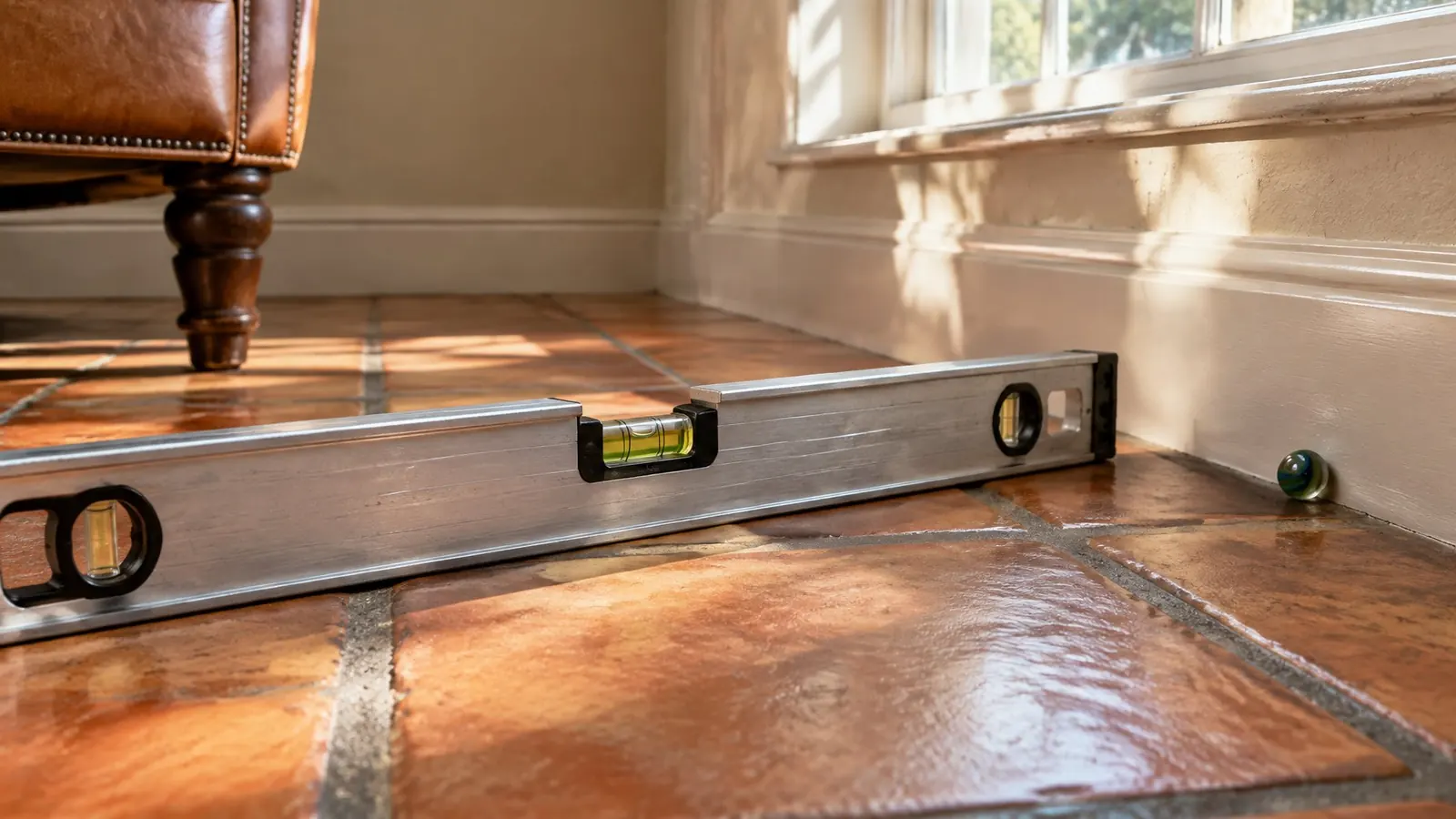
You can get a rough idea. Lay a long level on the floor in several rooms and note which way the bubble goes, or set a marble down and see where it rolls. Write the results down by room. It will not replace a survey, but it helps you describe the problem on the phone.
When you are ready
Pages can narrow it down. A level and a floor plan settle it.
Whichever side of the escarpment your house stands on, the answer comes from numbers taken on the spot. The firm that makes the visit then sets down on paper what it measured and what a repair would run to.
Sudden shifting, the smell of gas, or a wall that seems about to come down is a different matter: clear the house first, then dial 911 or your gas provider.
Have your New Braunfels house measured
Ring the number and describe the crack, door or floor that worries you. Whoever answers works for a foundation repair firm near New Braunfels, a separate and independent business, and can book a day to inspect.
Call (830) 879-9995Your call may be recorded. The referral disclosure explains who is paid.