Signs
A chimney, porch or steps pulling away from the house
Porches, front steps, patios and chimneys are heavy, and they often stand on their own small footings beside the house instead of on the main foundation. They can move without the house moving at all.
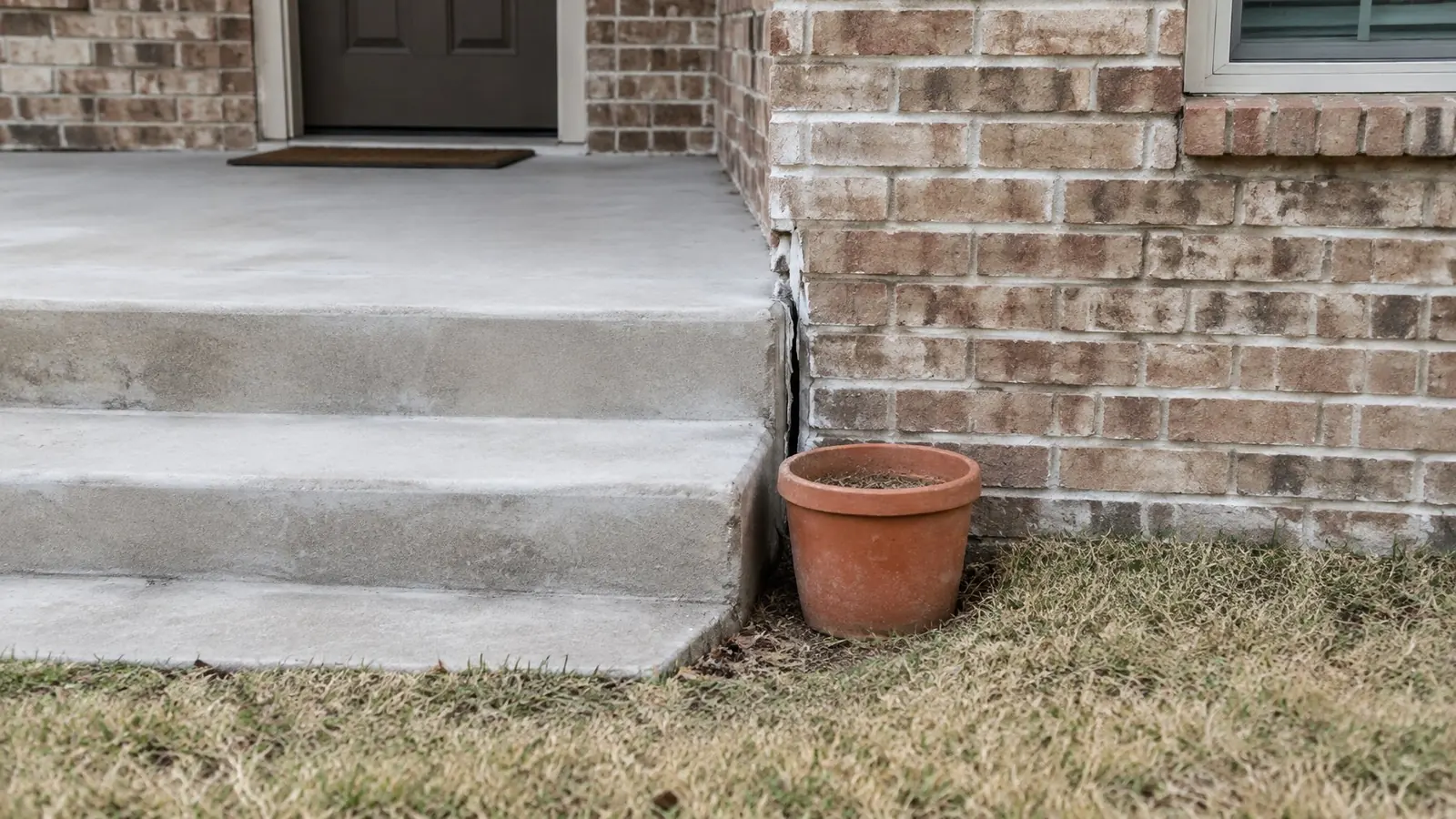
Why attached pieces move first
A house slab is stiffened by deep beams around its edge. A porch slab is usually thinner, was often poured as a separate piece and sits on whatever soil was pushed back against the house when building finished. That backfill is looser than undisturbed ground and keeps compacting for years.
A masonry chimney puts a great deal of weight on a small area. If its footing is shallow or not tied into the house foundation, it can lean outward at the top while the wall beside it stays where it was.
Water finishes the job. Porches and chimneys stand at the outside corners where downspouts empty and where the ground dries hardest in summer.
What the gap may be telling you
- Even gap, top to bottom
- The porch or steps have slid or settled as one piece. Often the add-on alone has moved.
- Gap wider at the top
- The piece is rotating away from the house. On a chimney this shows as daylight between the brick and the siding near the roof.
- Gap plus cracks indoors
- If the rooms behind that wall have their own cracks and sticking doors, the house foundation may be involved as well.
- A neat, straight joint
- Builders leave a deliberate joint between a slab and a porch so each can move a little. A filled, uniform joint that has not changed is doing its job.
- Posts and beams out of line
- On a wooden porch, look at the bases of the posts. Rot there lets the roof sag, and that is carpentry, not foundation work.
What gets checked
The first question is which part moved. An inspector holds a level against the chimney and against the house wall, measures the porch slab for tilt, and takes floor readings in the rooms behind. If the house reads flat and the porch is tilted, the problem is confined to the porch.
They will also trace the water: where the roof drains, whether the soil slopes back toward the wall, whether a void has opened under the slab. Tapping a porch slab and hearing a hollow sound suggests the soil beneath has gone.
Possible repairs
A sunken porch, patio or set of steps can often be raised by injecting grout or expanding foam beneath it to fill the void and push the slab back up. A leaning chimney may be given its own piers, commonly helical ones, to stop the movement and sometimes ease it back. Where a piece is badly broken, taking it out and rebuilding it on a proper footing can be the more sensible course.
The gap is sealed afterwards with a flexible joint so rain does not run down the wall into the soil.
Questions about porches and chimneys
The only gap is at the porch. Does that mean the house foundation is sound?
It makes a separate porch problem more likely, but nobody can confirm it without measuring the house too. A short inspection normally answers the question.
Can I just caulk the gap?
Sealing keeps water out and is worth doing once the cause is known. Caulk will not stop the movement, and a gap that keeps widening will tear it.
When you are ready
Pages can narrow it down. A level and a floor plan settle it.
Whichever side of the escarpment your house stands on, the answer comes from numbers taken on the spot. The firm that makes the visit then sets down on paper what it measured and what a repair would run to.
Sudden shifting, the smell of gas, or a wall that seems about to come down is a different matter: clear the house first, then dial 911 or your gas provider.
Have your New Braunfels house measured
Ring the number and describe the crack, door or floor that worries you. Whoever answers works for a foundation repair firm near New Braunfels, a separate and independent business, and can book a day to inspect.
Call (830) 879-9995Your call may be recorded. The referral disclosure explains who is paid.