Local guide
Why foundations move in New Braunfels
Two houses a short drive apart in New Braunfels can stand on ground that behaves in opposite ways. The reason is a line of old faults that runs straight through town.
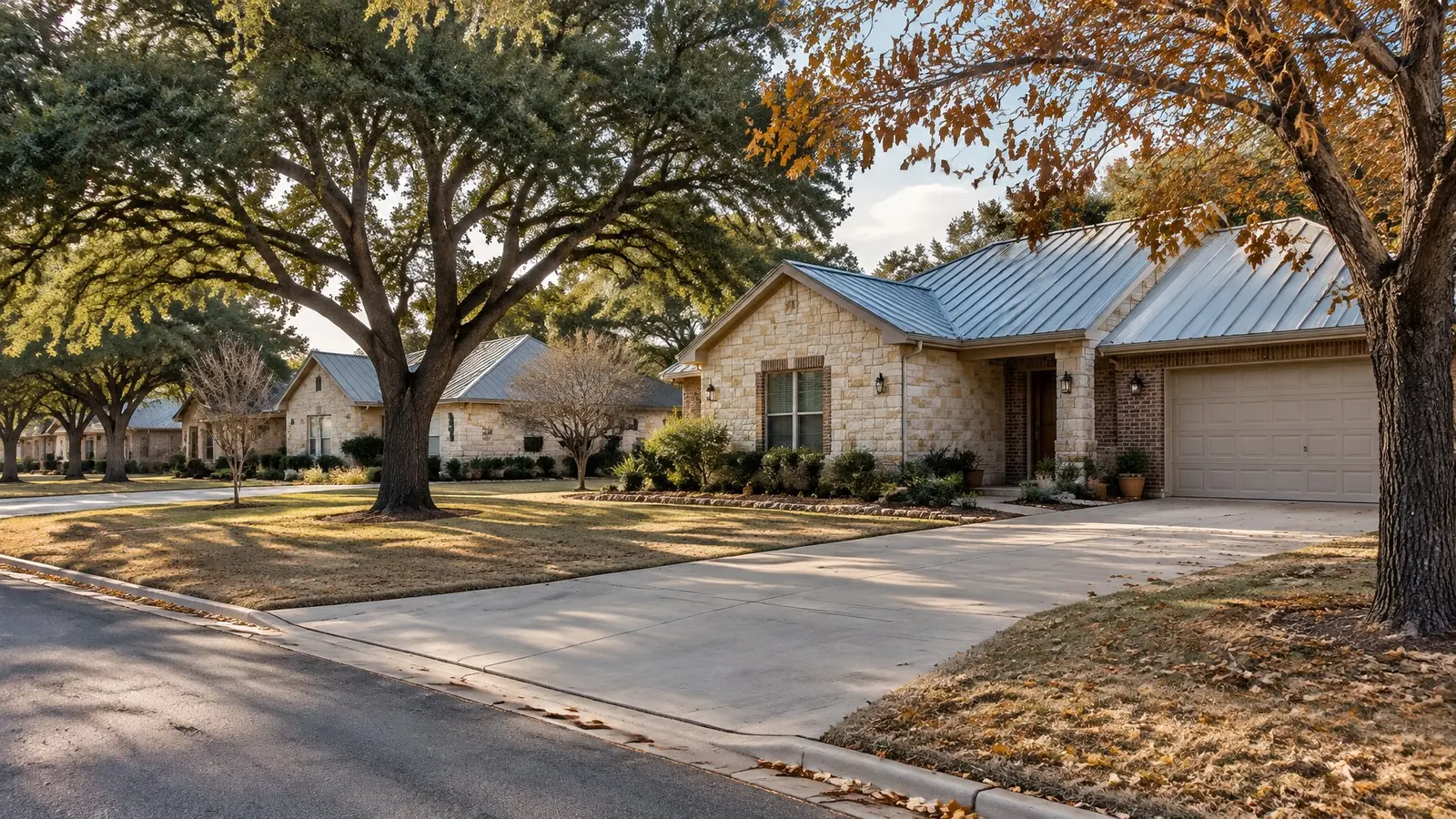
A town built across the Balcones Escarpment
The Balcones Escarpment is a fault zone several miles wide that separates the Edwards Plateau to the west from the coastal plains to the east. Comal County lies on that divide. Below the escarpment its eastern part is gently rolling prairie; the larger north-western part is higher, rougher Hill Country.
You can walk the boundary. The city's Panther Canyon Nature Trail starts in Landa Park beside the headwaters of Comal Springs, which rise within the fault zone, and climbs the escarpment onto the plateau. Houses above that climb and houses below it have different ground under them.
Below the escarpment and above it
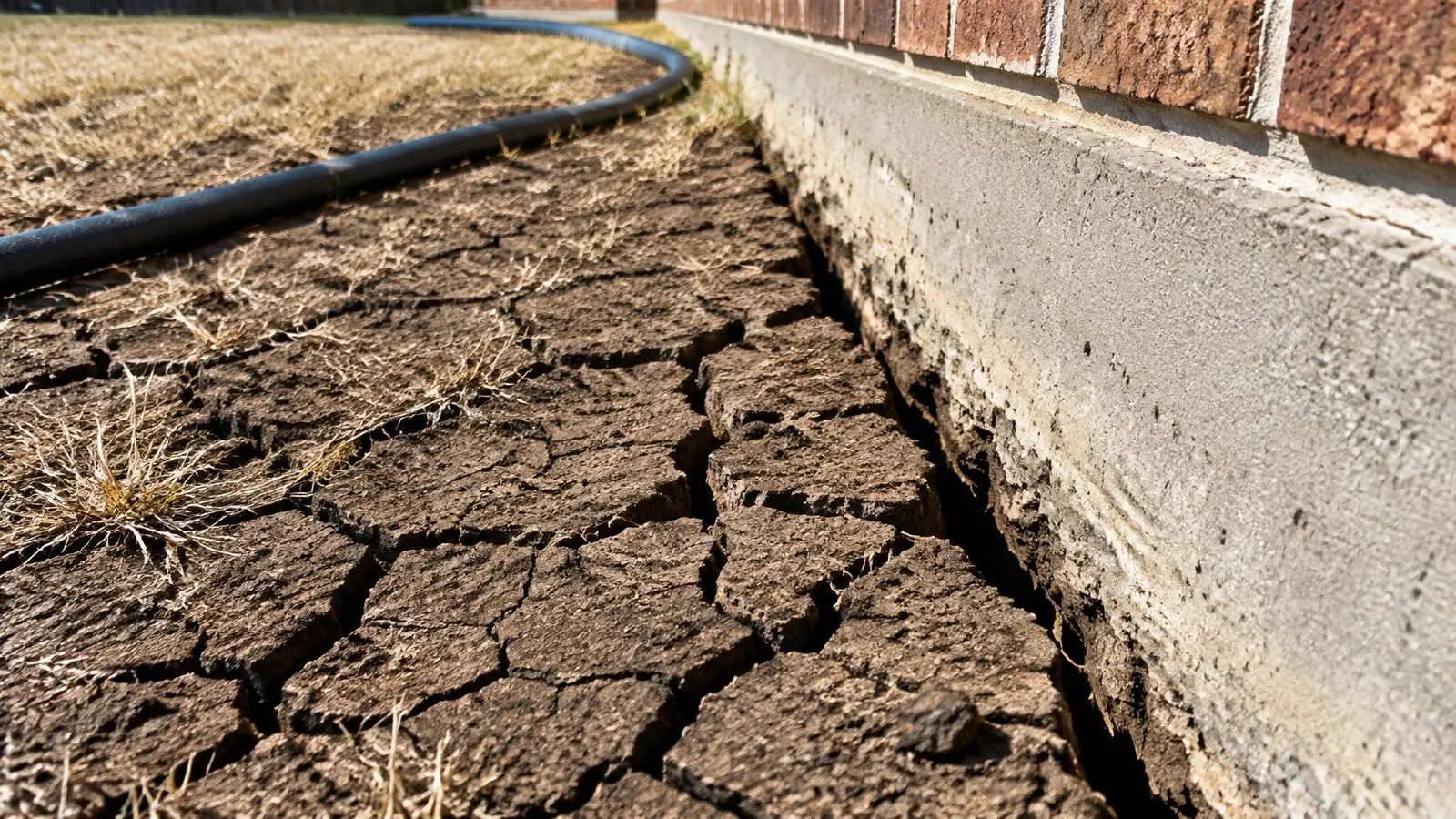
East and south: Blackland Prairie
Deep clay that cracks when dry
The prairie side has loam over clay subsoils, and across the county line in the north-west of Guadalupe County the soil is described as dark, calcareous clay. The federal soil survey's description of Houston Black clay, a typical Blackland soil, gives the behaviour: high shrink-swell potential, and in dry periods cracks from half an inch to four inches wide that reach a foot or more down.
The survey adds a detail that matters for houses. Water enters this clay quickly while it is dry and cracked and very slowly once it is moist. So the first storm after a drought pours into the cracks at the edge of a slab, the soil there swells, and the middle of the house, which stayed sheltered, does not move with it.
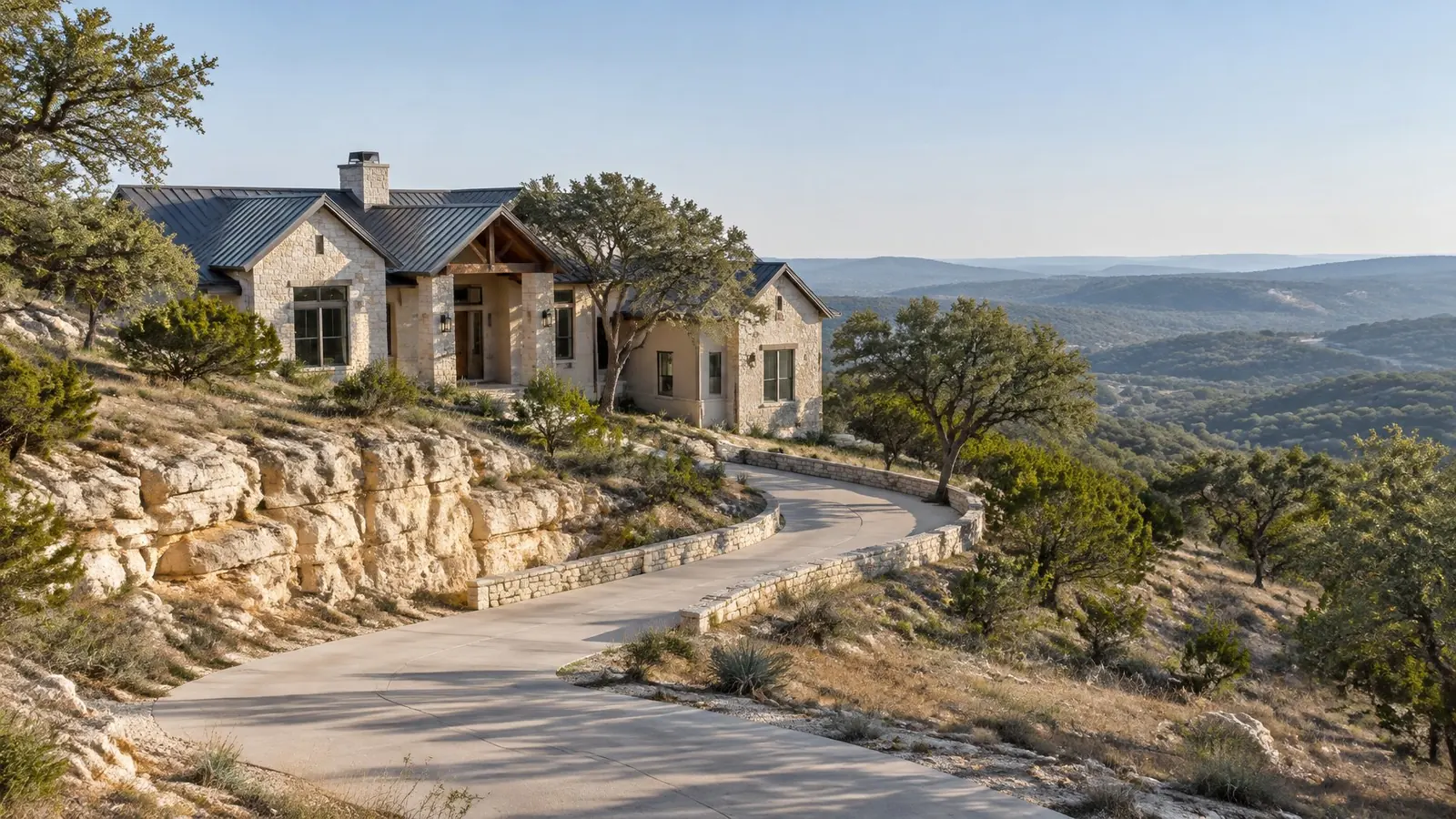
West and north: Edwards Plateau
Shallow soil on hard limestone
On the plateau the common upland soils, such as the Eckrant series, are described as very shallow to shallow over hard limestone, with rock typically four to twenty inches down. There is little clay to swell, and a slab bearing on rock is on about the steadiest support there is.
The difficulties come from the shape of the land. Lots on slopes are levelled by cutting into the high side and filling the low side. A house then sits partly on rock and partly on fill, and fill settles. Pockets of clay lie between the ledges. Rain runs off thin soil fast and gathers against the uphill wall.
Along the Comal and the Guadalupe: terrace soils
The rivers add a third kind of ground. Over time they laid down terraces of their own sediment, and the federal soil survey describes several quite different soils on stream terraces in this part of Texas: clayey alluvium that cracks in dry weather much as the upland prairie clay does, loamy alluvium that drains well, and in places a shallow clay over beds of old river gravel.
For a homeowner near the rivers the point is that soil can change within a few lots. A neighbour's experience with their slab is weaker evidence here than it would be in a town built on one uniform soil.
What sets the ground moving
- Drought, then rain
- Clay shrinks through a dry summer and swells when rain returns. The outer few feet of a slab see the biggest swings because that soil is exposed to sun and weather.
- Trees
- A mature tree pulls a great deal of water out of the soil near it. In a dry year the clay under the nearest corner of the house shrinks further than the rest.
- Leaking pipes
- A drain or supply leak under the floor wets one patch of soil all year. On clay that patch heaves. On fill it can wash fine material away.
- Poor drainage
- Downspouts emptying at the wall and soil sloping toward the house keep one side wetter than the others.
- Fill that was not compacted
- Soil placed to level a lot or to backfill around a new foundation goes on settling under the weight of the house, sometimes for years.
How to use this when you call
Tell the company roughly where the house is, whether the lot slopes, and whether you know of fill or a retaining wall. Those three facts shape what an inspector expects before they arrive.
You can look up the mapped soil for your own address on the federal Web Soil Survey. The map is drawn at farm scale, so treat it as a first indication. For a repair design, an engineer relies on what is actually under your house.
For what you can do about moisture yourself, see looking after a foundation.
Local questions
Is one side of New Braunfels worse for foundations?
They fail in different ways. Slabs on prairie clay are more exposed to seasonal movement. Houses on the limestone side are steadier where they bear on rock and more exposed to settlement of fill and to runoff on sloping lots. Neither side is trouble-proof.
Does a house on rock ever need foundation repair?
Yes. The part of the house that sits on fill can settle, clay pockets can swell, and retaining walls and porches built on shallow footings can move. Rock under one end of a slab does not help the other end.
When you are ready
Pages can narrow it down. A level and a floor plan settle it.
Whichever side of the escarpment your house stands on, the answer comes from numbers taken on the spot. The firm that makes the visit then sets down on paper what it measured and what a repair would run to.
Sudden shifting, the smell of gas, or a wall that seems about to come down is a different matter: clear the house first, then dial 911 or your gas provider.
Have your New Braunfels house measured
Ring the number and describe the crack, door or floor that worries you. Whoever answers works for a foundation repair firm near New Braunfels, a separate and independent business, and can book a day to inspect.
Call (830) 879-9995Your call may be recorded. The referral disclosure explains who is paid.