Signs
Foundation crack repair: cracks in the slab itself
You pull up old carpet, or look across the garage floor, and there is a crack in the concrete. Before worrying, look at three things: how wide it is, whether the two sides sit at the same height, and whether it is getting longer.
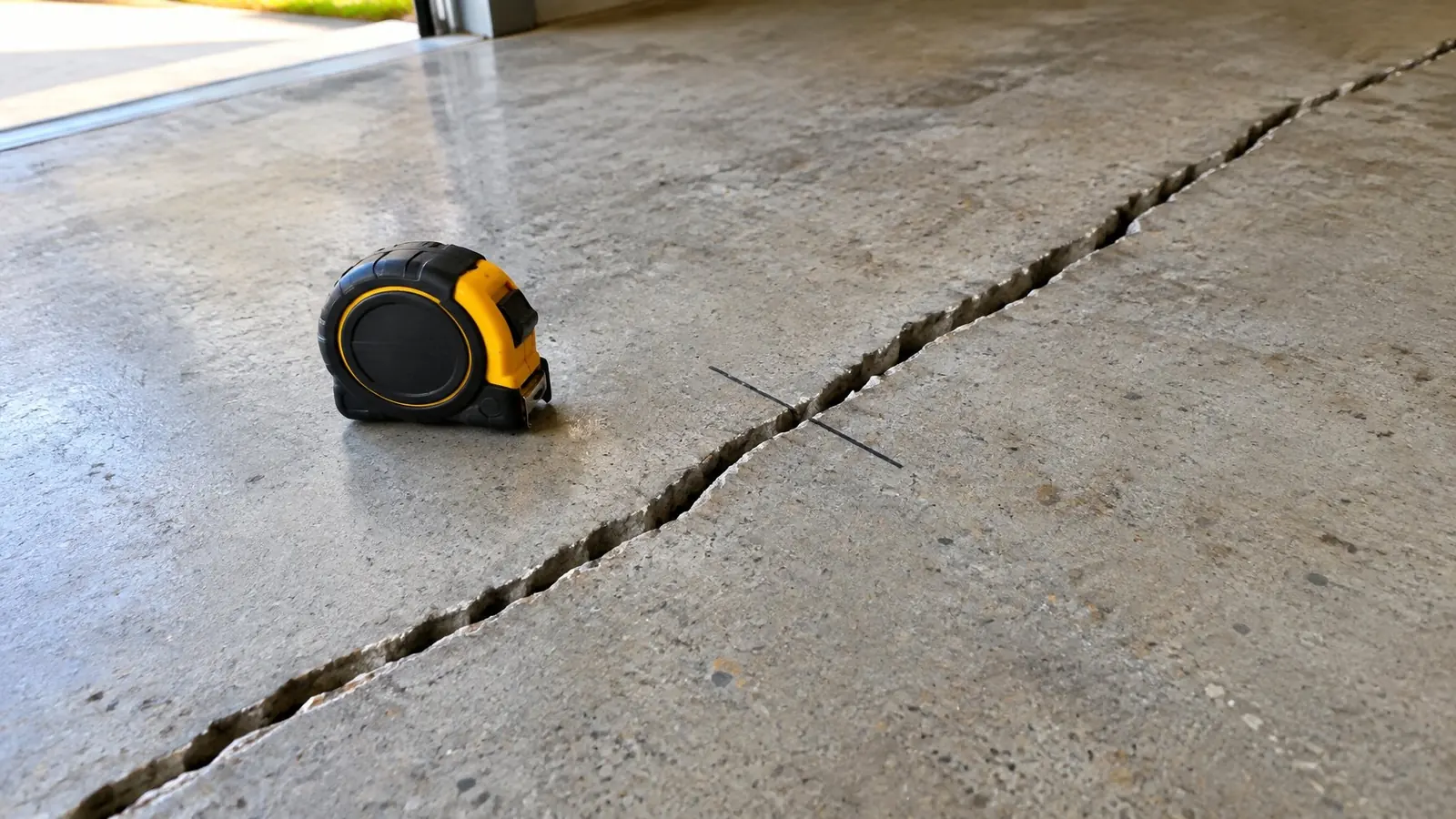
Reading a crack in concrete
- Hairline, flat, random
- Thin cracks with both sides level, wandering across the floor, are normally shrinkage from the concrete curing. Nearly every slab has some.
- One side higher
- If a coin laid across the crack rocks, or you can feel a lip with your shoe, the two pieces of slab have moved relative to each other. This is the feature inspectors take most seriously.
- Wide and widening
- A crack you can fit a pencil into, or one that has grown since you marked it, suggests the slab is still moving.
- Through the floor covering
- A crack that telegraphs through ceramic tile in a straight line across a room often follows a crack in the slab beneath.
- At the outside edge
- Vertical cracks in the exposed face of the slab below the brick deserve a look. A wedge of concrete breaking off right at a corner is common and is usually caused by the brick above expanding in the heat rather than by settlement.
What cracks a slab besides settlement
Concrete shrinks as it dries, and it cracks where that shrinkage is restrained. Builders cut or tool joints into garage floors and driveways so the crack forms in the joint. Inside a house there are no such joints, so the cracks pick their own path.
Water is the other common cause. A drain or supply line leaking under the slab wets the soil in one spot. On clay that soil swells and pushes up. A plumber can pressure-test the lines and find out; that test is often part of a thorough foundation evaluation.
Roots matter in dry years. A large tree close to the house draws moisture from the soil under the nearest edge, and clay shrinks as it dries.
What the company measures
Width, length and any height difference across the crack, then floor elevations on both sides of it. A crack with level readings either side is treated very differently from one that marks the edge of a section that has dropped.
Expect questions about the house as well: its age, whether the cracks were there when you bought it, any plumbing repairs, and whether the builder left paperwork about the slab design.
Two very different repairs
The crack is stable
Sealing
A crack that is not moving can be filled with epoxy or a flexible polyurethane so moisture, soil gas and insects stay out, and so new flooring lies flat over it. It is a modest job. It does nothing to hold a slab that is still moving.
The slab has moved
Supporting, then sealing
Where one part has settled, the cause has to be dealt with first: a leak fixed, drainage corrected, or the low section carried on piers and lifted. The crack is sealed last. See house leveling for how lifting works.
Questions about slab cracks
Are all cracks in a foundation structural?
No. Most are shrinkage cracks that formed in the first months after the pour and have not changed since. Height difference across the crack, growth, and matching signs in the walls and doors are what separate the two kinds.
Can a foundation crack simply be filled?
If it is stable, yes, and that may be all it needs. If the slab is moving, a filled crack will open again, and the money is better spent finding out why.
When you are ready
Pages can narrow it down. A level and a floor plan settle it.
Whichever side of the escarpment your house stands on, the answer comes from numbers taken on the spot. The firm that makes the visit then sets down on paper what it measured and what a repair would run to.
Sudden shifting, the smell of gas, or a wall that seems about to come down is a different matter: clear the house first, then dial 911 or your gas provider.
Have your New Braunfels house measured
Ring the number and describe the crack, door or floor that worries you. Whoever answers works for a foundation repair firm near New Braunfels, a separate and independent business, and can book a day to inspect.
Call (830) 879-9995Your call may be recorded. The referral disclosure explains who is paid.