Signs
House leveling: when one side of the house is sinking
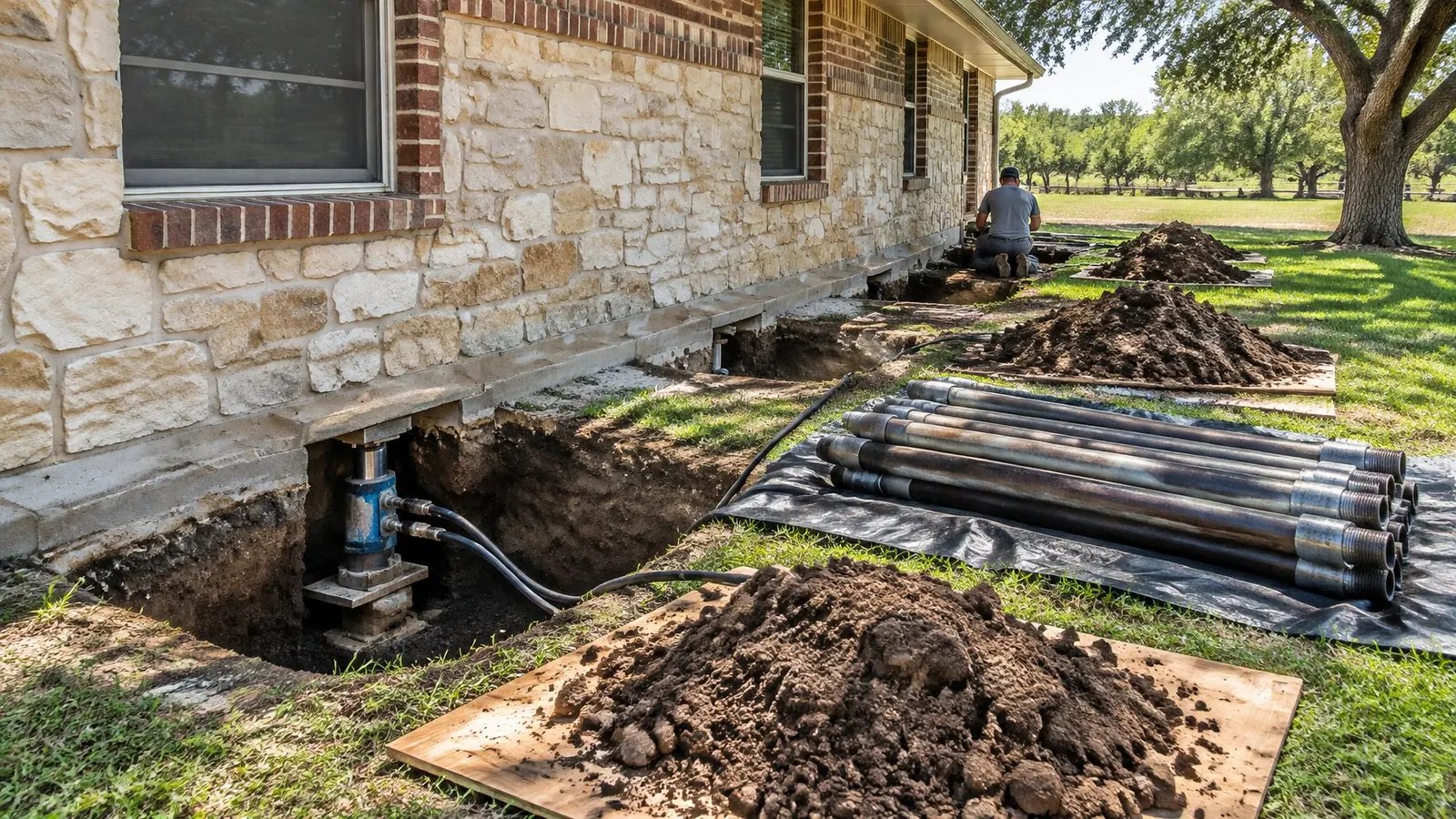
In Texas, lifting a settled house back toward where it started is called house leveling. On a slab that means piers and hydraulic jacks along the low side. It is the heaviest foundation repair most houses ever get, so it pays to understand it before agreeing to it.
Signs that one side has dropped
- Cracks, sticking doors and a sloping floor all gathered at one end or one corner of the house.
- Brickwork on that side leaning out at the top, or a gap opening at the frieze board under the eaves.
- The exposed slab edge sitting visibly lower against the brick courses at one corner than at the others.
- Interior walls separating from the ceiling along the low side.
- A roofline or a row of window heads that no longer looks straight from the street.
Sinking, or the rest rising?
A floor that is low on the east side is also high on the west side. Which half moved decides the repair.
Settlement
Part of the house went down
Soil under one edge dried and shrank, was poorly compacted fill, or washed out. That edge follows it down. Piers that carry the edge to deeper, steadier ground address this directly.
Heave
Part of the house came up
Clay under one area took on water, often from a plumbing leak or poor drainage, and swelled. Piering the side that only looks low does not fix it. The water source has to be found and stopped, and the soil given time to dry.
An elevation survey, a plumbing test and a look at the drainage are how a company or engineer tells the two apart. Be wary of a leveling proposal that skipped them.
What happens during a lift
Holes are dug at each pier location
Outside along the affected beam, and sometimes inside through the floor or by tunnelling under the slab.
Piers are driven or drilled
Each one goes down until it reaches material firm enough to carry its share of the house.
The house is raised in small steps
Jacks at every pier lift together, a little at a time, while someone watches the walls and takes level readings.
The piers are locked off and the holes filled
The jacks come out, the load rests on the piers, soil goes back and the surface is restored.
The kinds of pier are compared in repair methods.
What leveling can and cannot do
The aim is to bring the house as close to its original position as it will tolerate, not to a perfect plane. A slab that was never flat cannot be made flat, and a frame that has sat crooked for years resists being straightened all at once. A careful company stops lifting when the structure tells it to.
Lifting moves things. Drain lines under the slab can crack or separate, so a plumbing test after the lift is standard practice. Tile, drywall and brick may crack as they are brought back. Ask what is covered if they do.
Depth is the local variable. East of the escarpment, piers may have to pass through a thick layer of active clay. On the limestone side, rock can be close to the surface, which shortens the pier but can make digging and drilling harder.
Questions about house leveling
Will the house be perfectly level afterwards?
Rarely, and a company that says so is overselling. Expect the low areas to be raised most of the way, doors to work better and cracks to narrow. Ask for elevation readings taken before and after so you can see what was achieved.
Can we stay in the house while it is being leveled?
On most jobs people do, since the work is mainly outside. Interior piers mean dust, noise and a room out of use. Ask the company how it plans to reach each pier.
How long does it take?
It depends on the number of piers, how deep they go and how easy the access is. The company should give you its own schedule in writing along with the price.
When you are ready
Pages can narrow it down. A level and a floor plan settle it.
Whichever side of the escarpment your house stands on, the answer comes from numbers taken on the spot. The firm that makes the visit then sets down on paper what it measured and what a repair would run to.
Sudden shifting, the smell of gas, or a wall that seems about to come down is a different matter: clear the house first, then dial 911 or your gas provider.
Have your New Braunfels house measured
Ring the number and describe the crack, door or floor that worries you. Whoever answers works for a foundation repair firm near New Braunfels, a separate and independent business, and can book a day to inspect.
Call (830) 879-9995Your call may be recorded. The referral disclosure explains who is paid.